TACHI NAOHIRO Ç KOSHIRAE










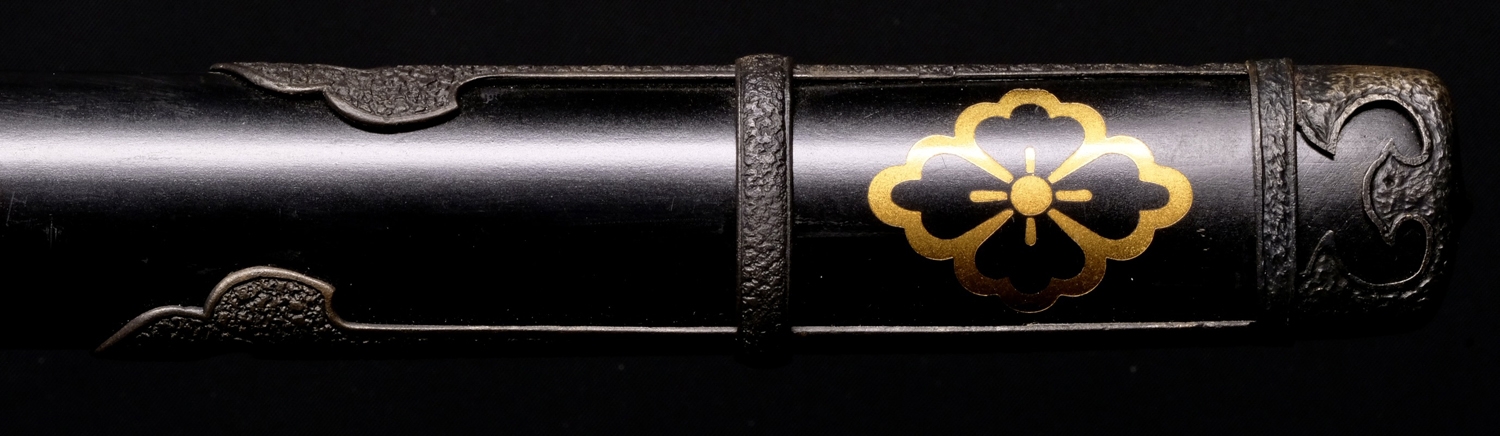
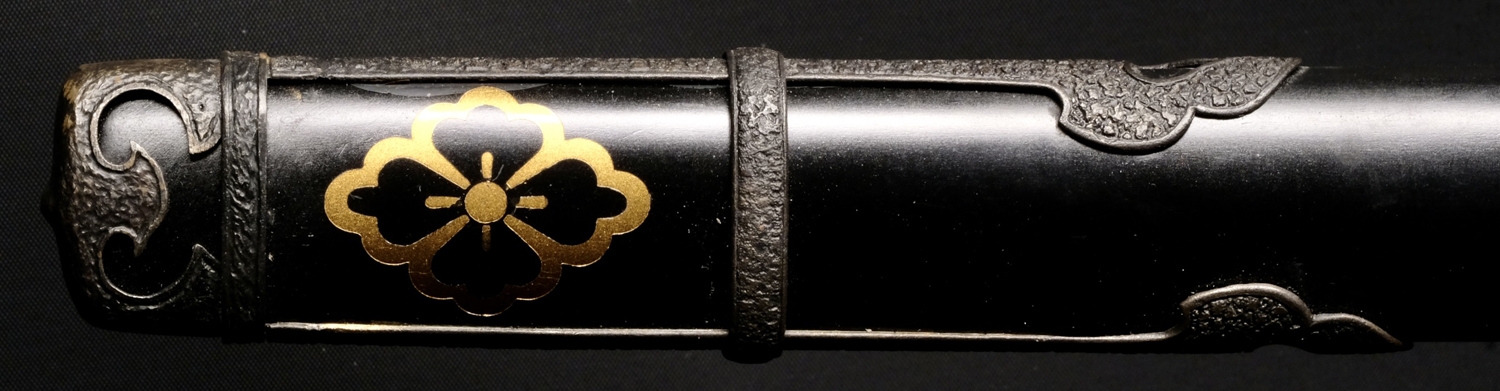
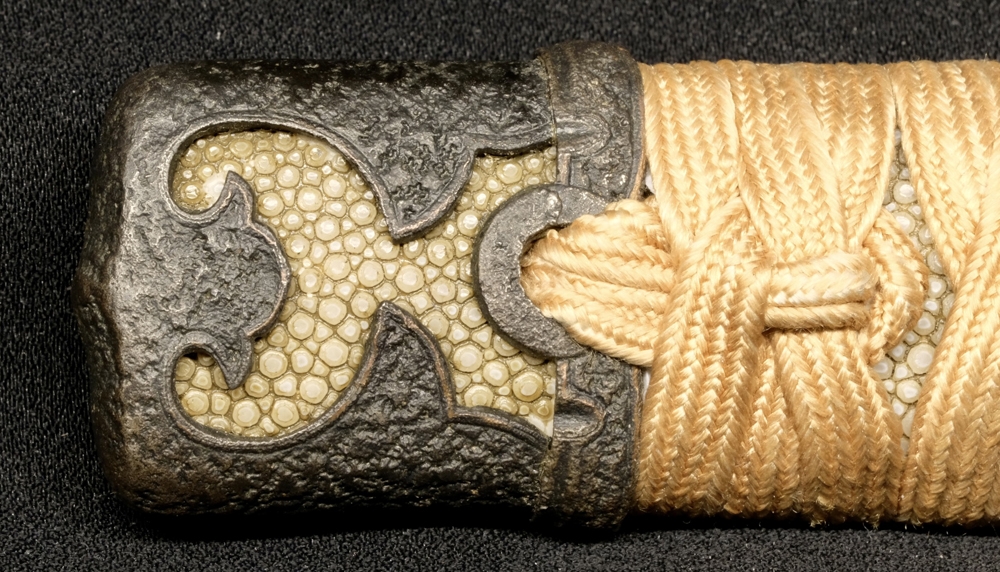
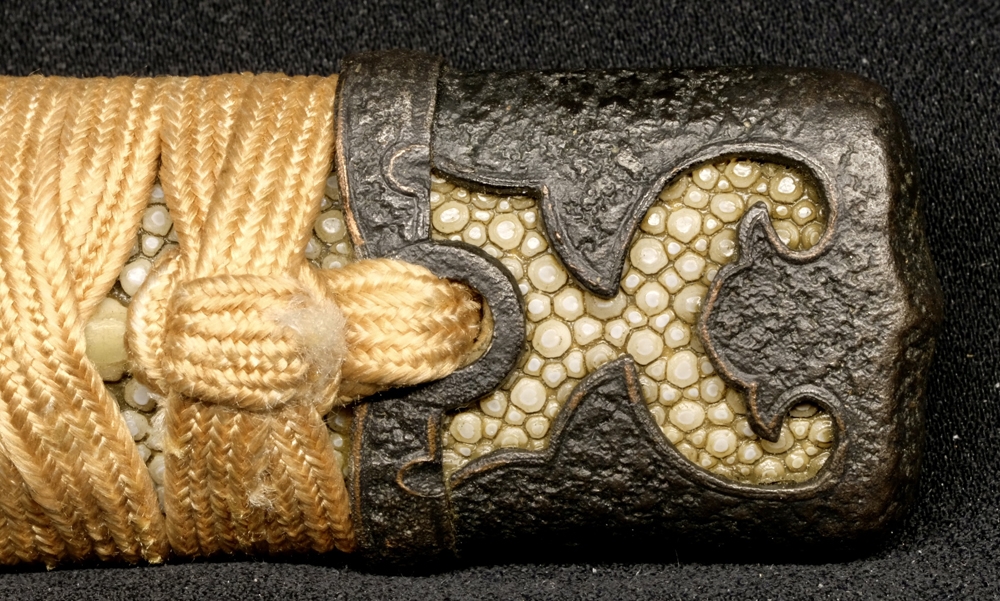
TACHI NAOHIRO in KOSHIRAE
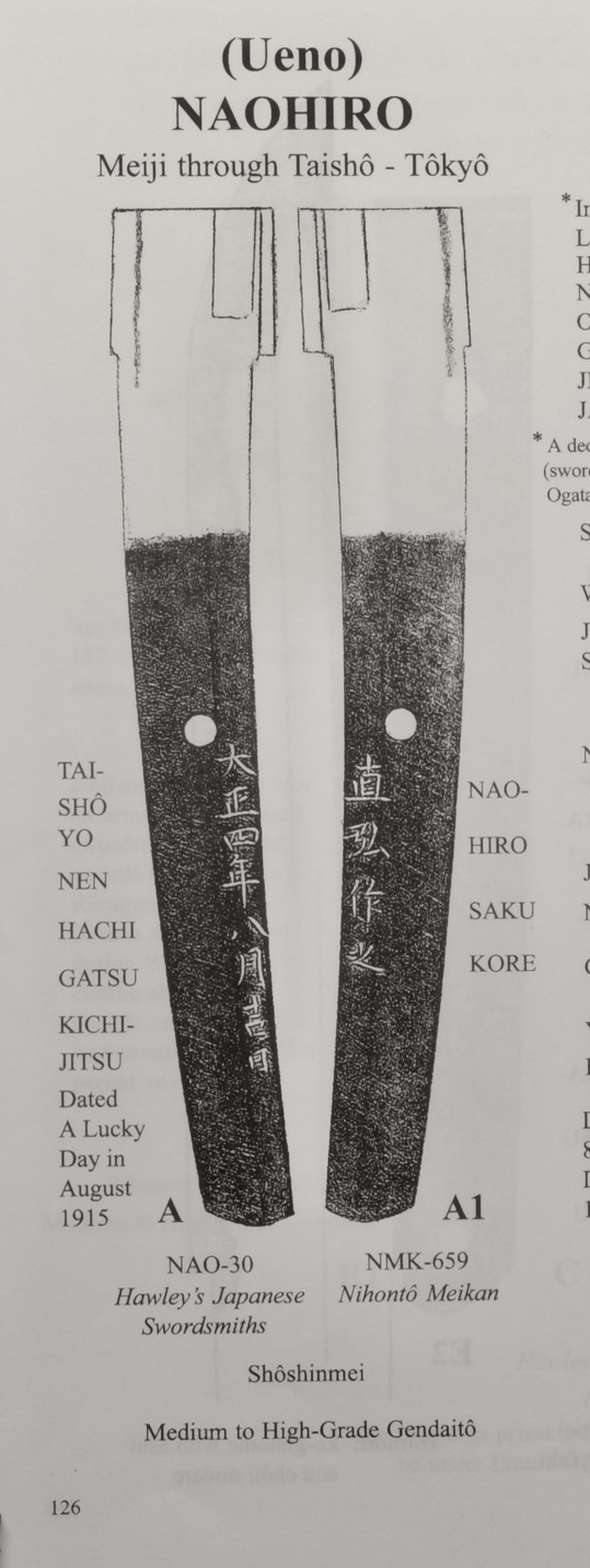
PUBLISHED ON PAGE 126 OF JOHN SLOUGH’S, “THE MODERN JAPANESE SWORDSMITH 1868-1945”.
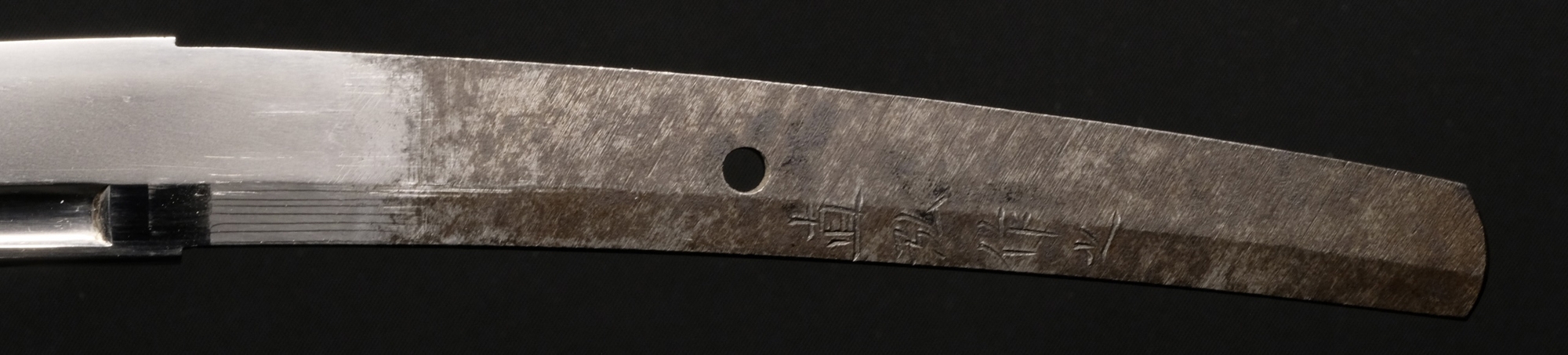
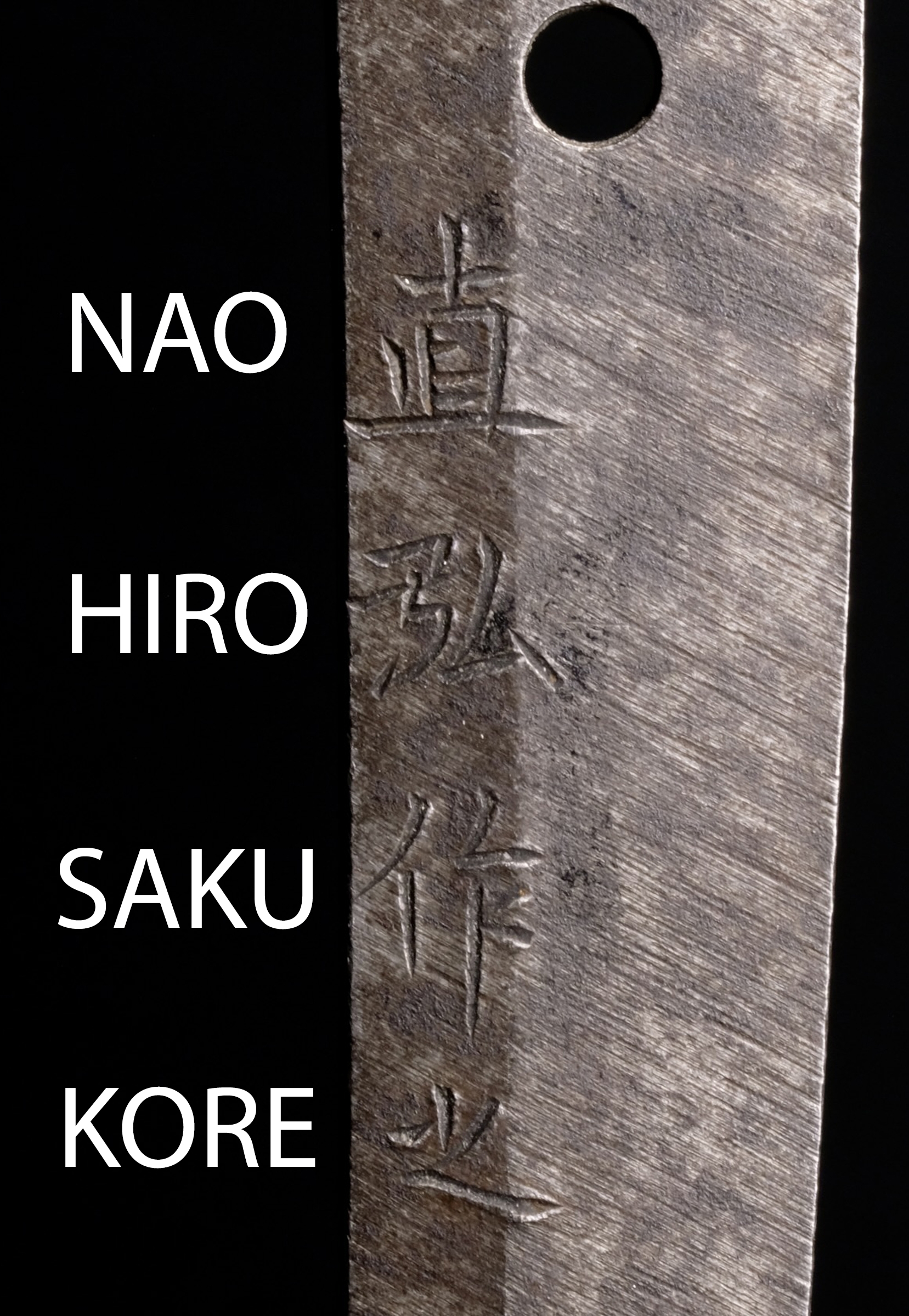
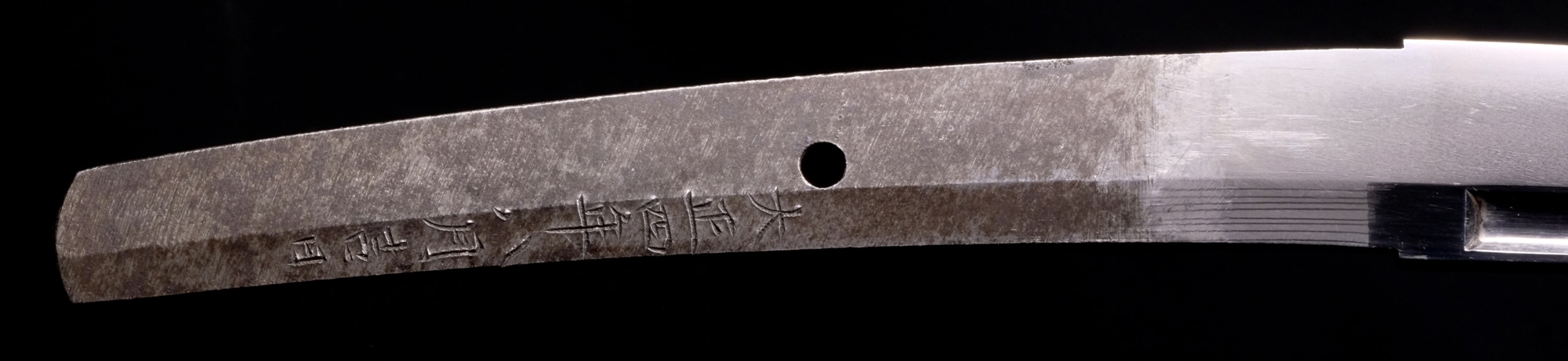
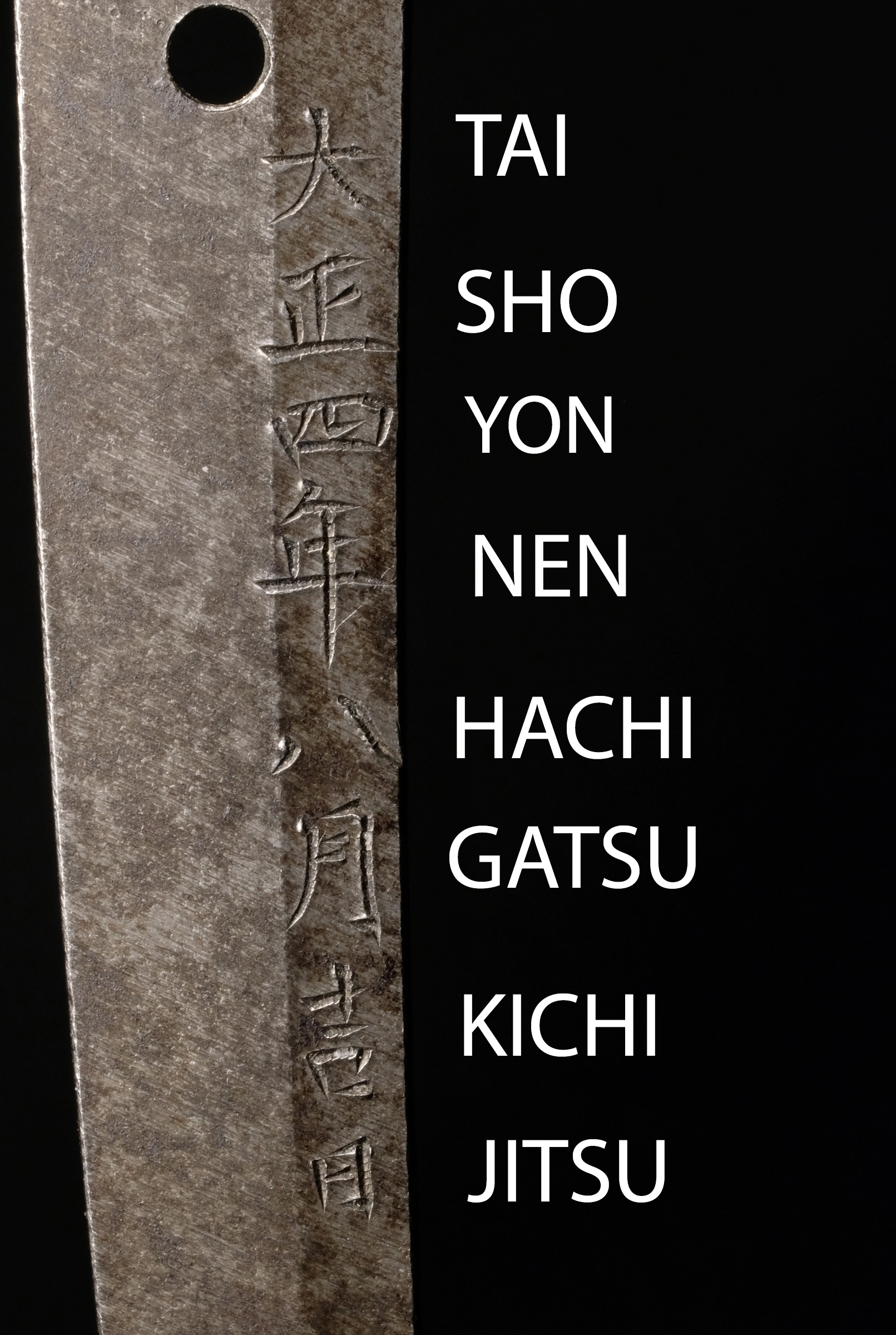
MEI: NAOHIRO SAKU KORE (TACHI MEI)
DATE: TAISHO YON NEN HACHI GATSU BI (1915)
NAGASA: 25”
OVERALL: 30.75”
MIHABA: 1”
KASANE: 0.25”
SORI: 0.75″
NAKAGO: UBU
MEKUGI ANA: ONE
YASURIME: SUJIKAI
MUNE: IORI
HADA: KO-ITAME
HAMON: SUGUHA
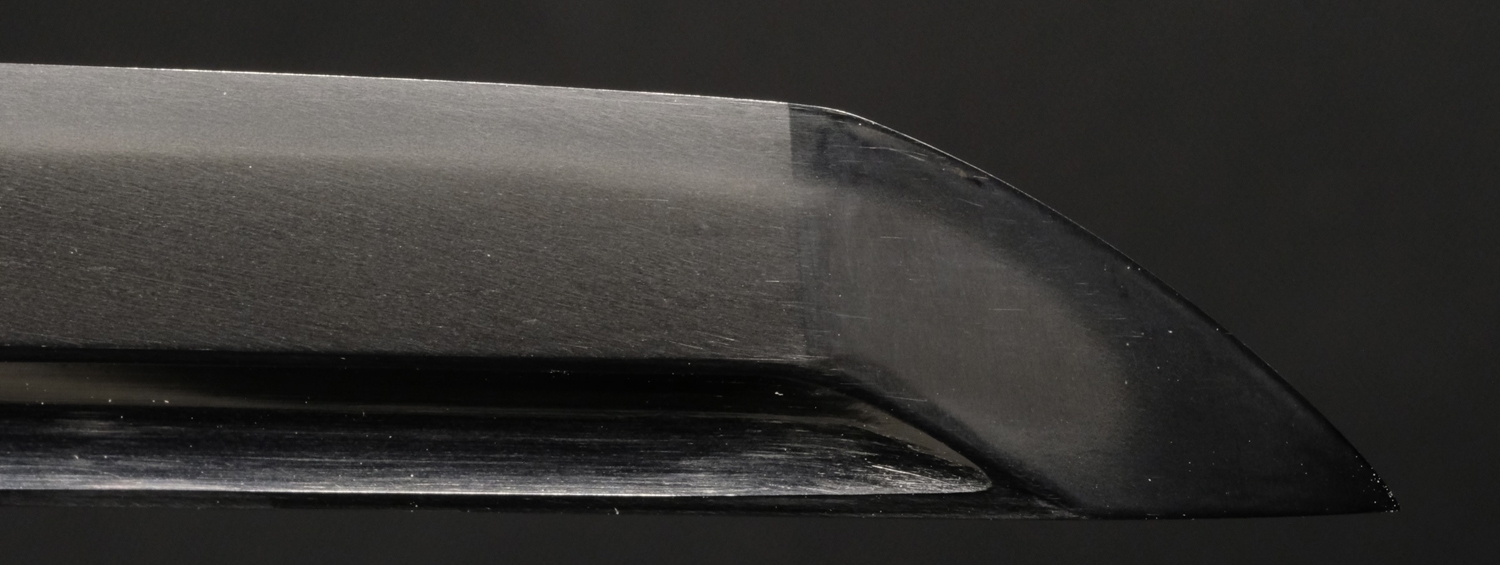
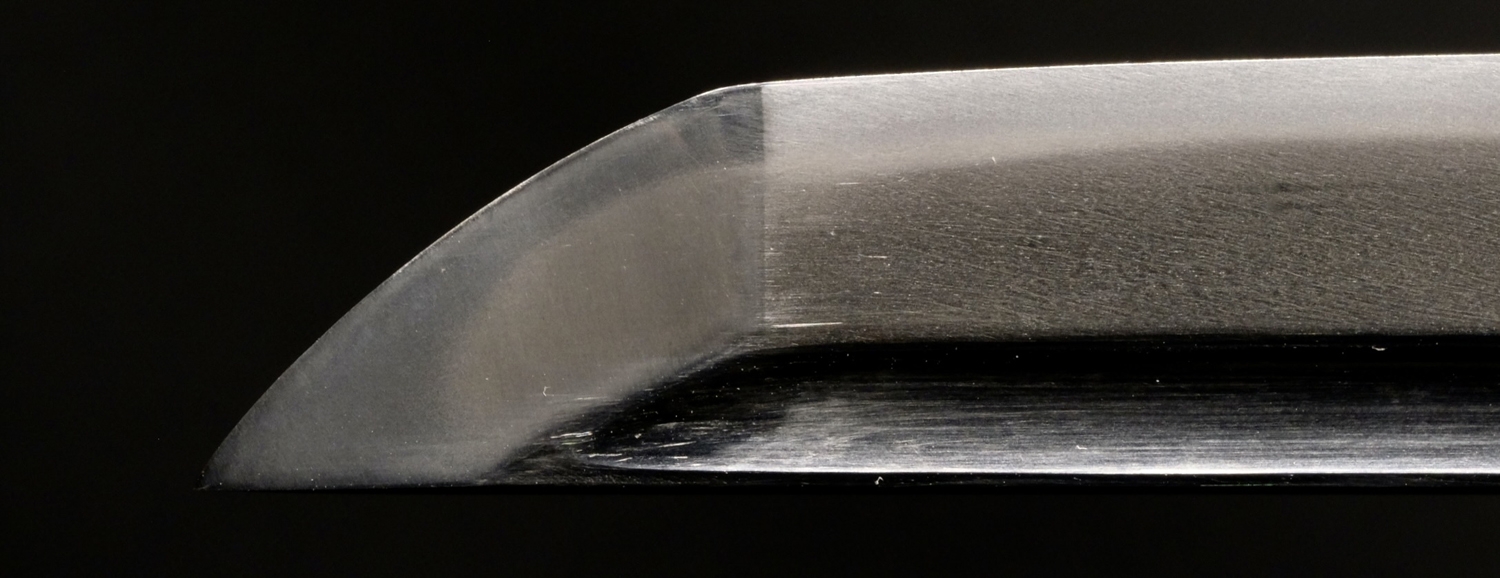
BOSHI: KOMARU
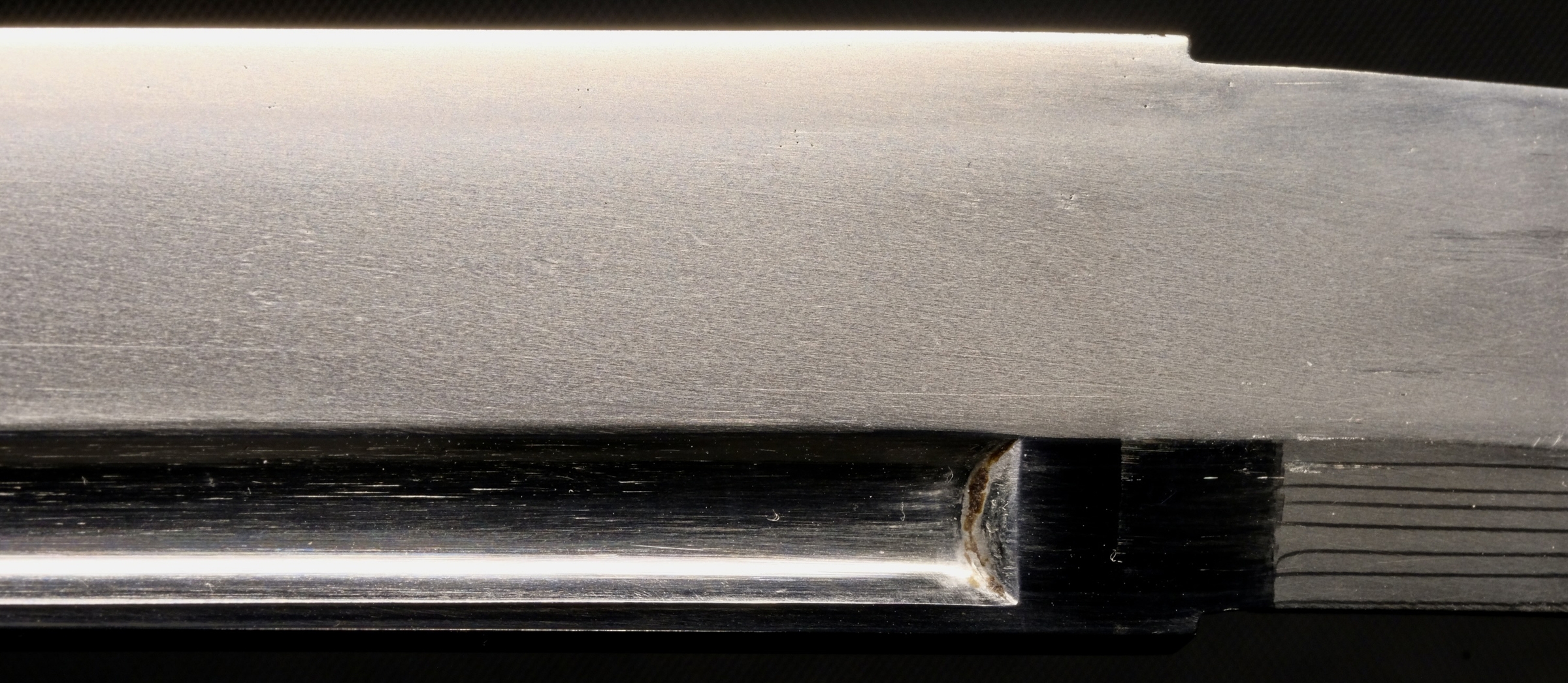
HORIMONO OMOTE: BO-HI with KAKU-DOME
HORIMONO URA: BO-HI with KAKU-DOME
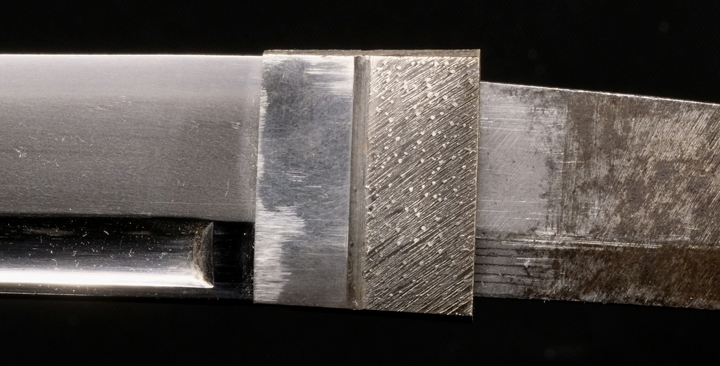
HABAKI: 1 PC. SILVER
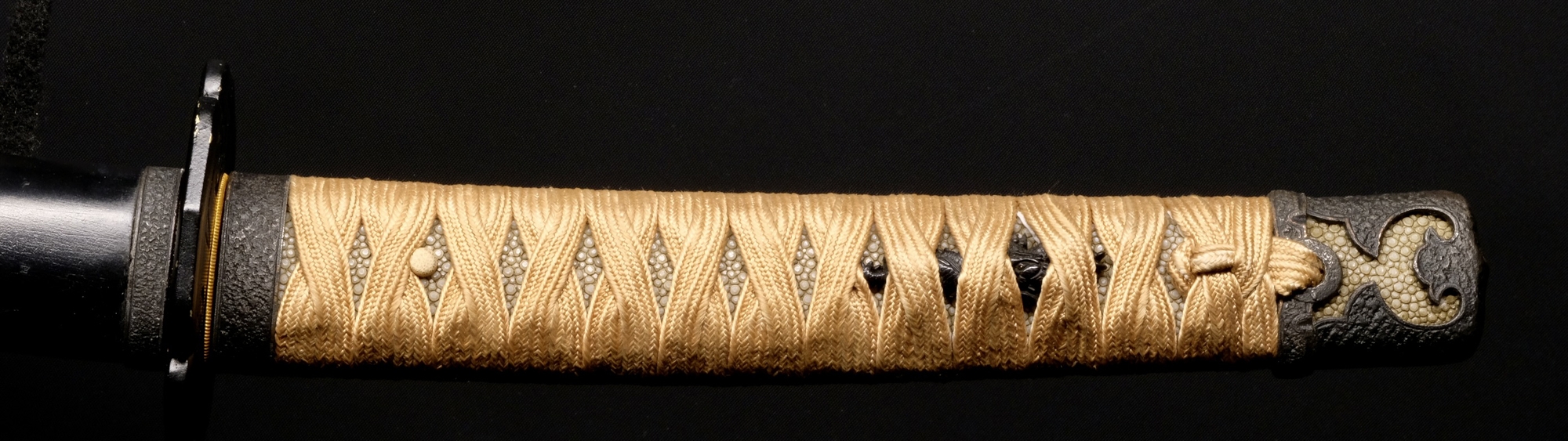
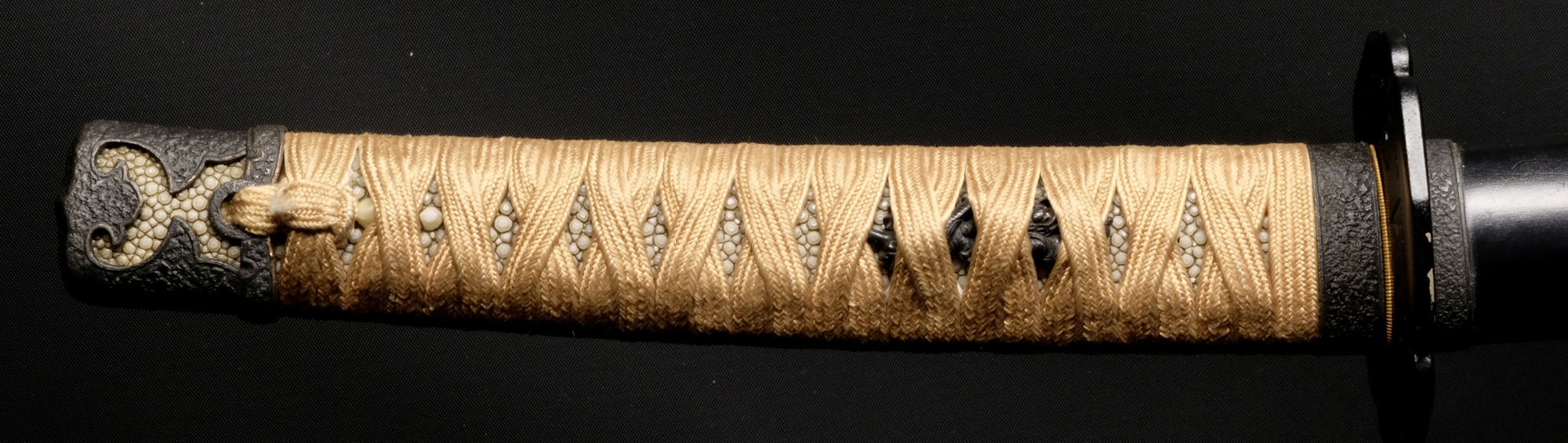
KOSHIRAE
REFERENCES:
Hawley’s (NAO 30), pg. 573
Gendaito Meikan pg.108
Gendai Toko Meikan pg. 75B
Slough’s Modern Japanese Swordsmiths pg.126
Nihonto Meikan (NMK-659)
Toko Taikan pg.446
Sesko’s, Swordsmiths A-Z., pg 76
There were a few Naohiro working in this time frame. Two are listed as working in Meji 1868-1912. Sloughs refers to this smith as Ueno Naohiro. Ueno Naohiro is listed as a Showa smith (1926-1989). This sword is dated Taisho (1915), so depending on his age when this sword was made certainly close enough for some overlap. If he was say 25 years old when he made this sword in 1915, he would have only been 36 in 1926.
The blade has a very elegant and graceful shape as it tapers gently from a 1” motohaba to 0.625 (5/8) sakihaba ending at the ko-kissaki. Boshi is ko-maru The toshi-zori shape reminds me of the early Kamakura tachi where the kissaki was just slightly larger than the previous Heian period Ikubi kissaki. There are bo-hi carved bilaterally which end at the base in Kaku-Dome or squared end. The Kaku-dome are said to be the hardest to carve. The jihada is a tight well forged ko-itame/masame, almost muji. The hamon is an exquisitely controlled suguha in nioi-deki. Nakago is ubu with one mekugi ana, yasurimei is sujikai.
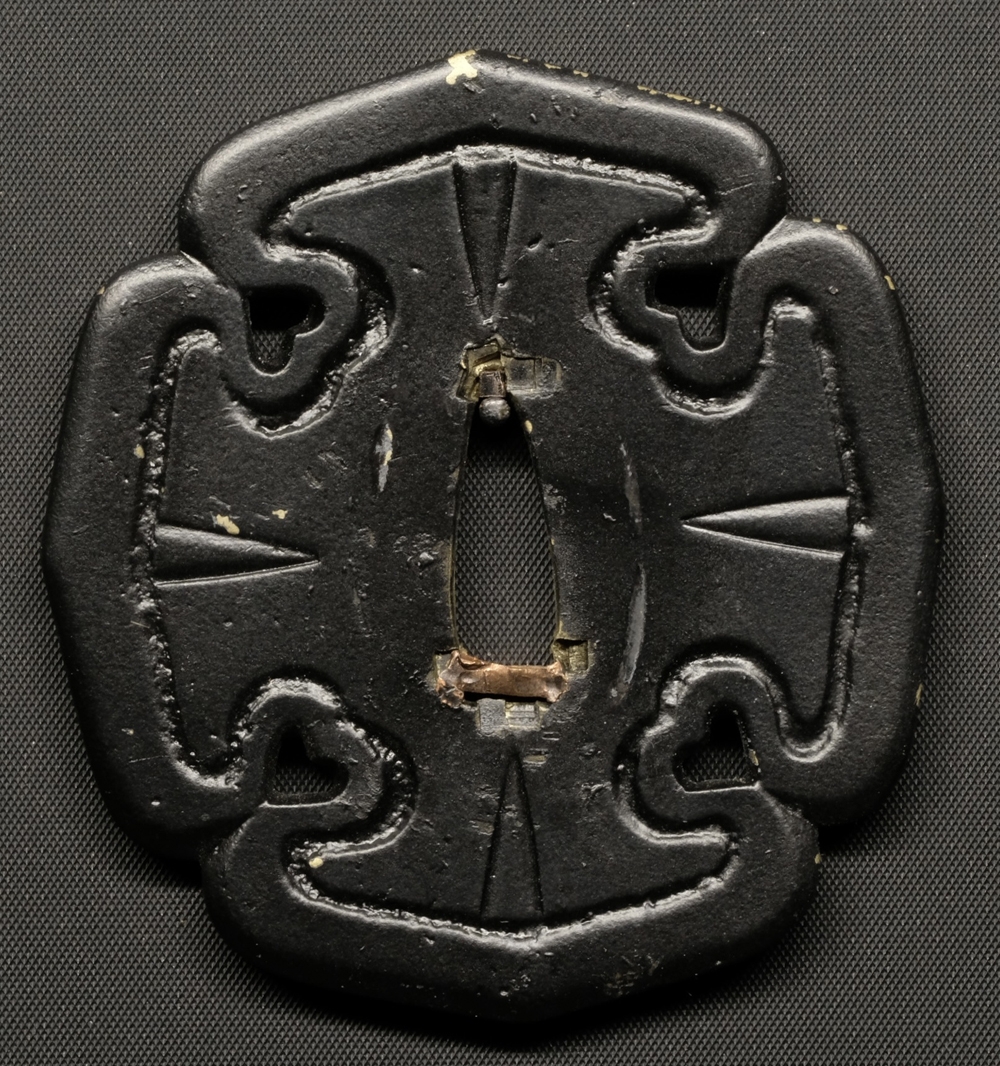
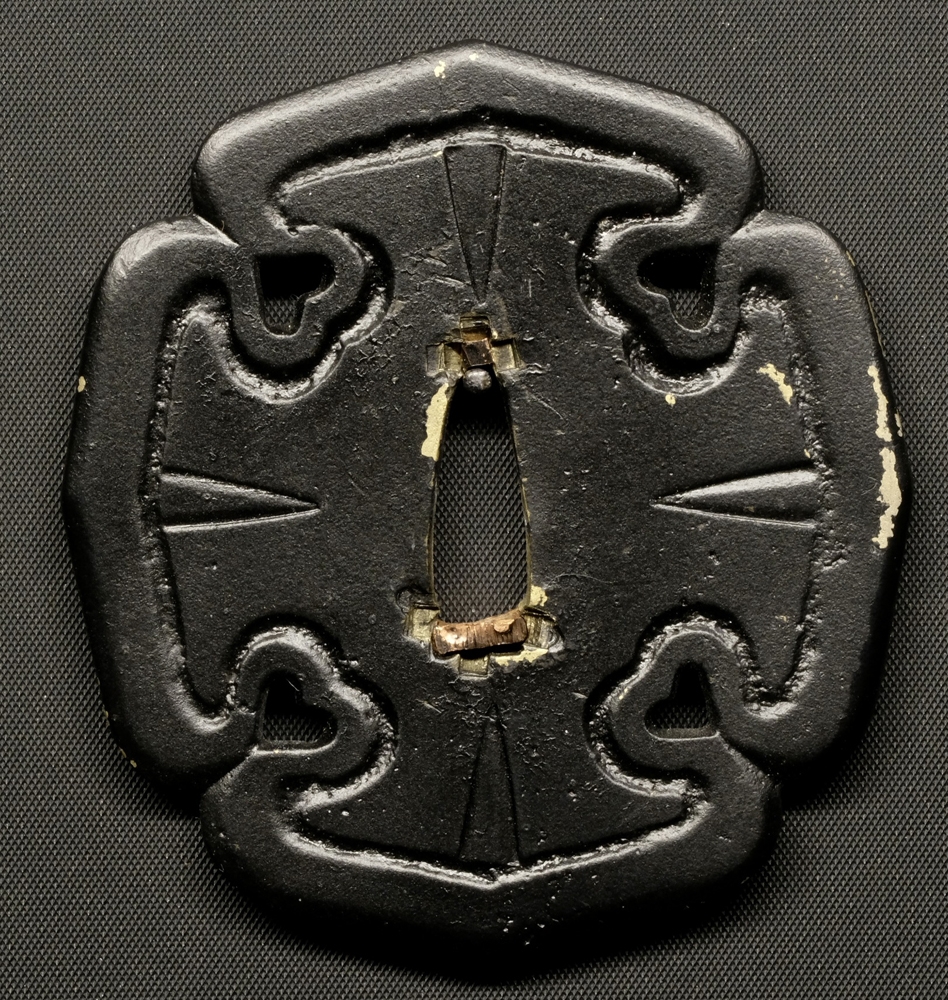
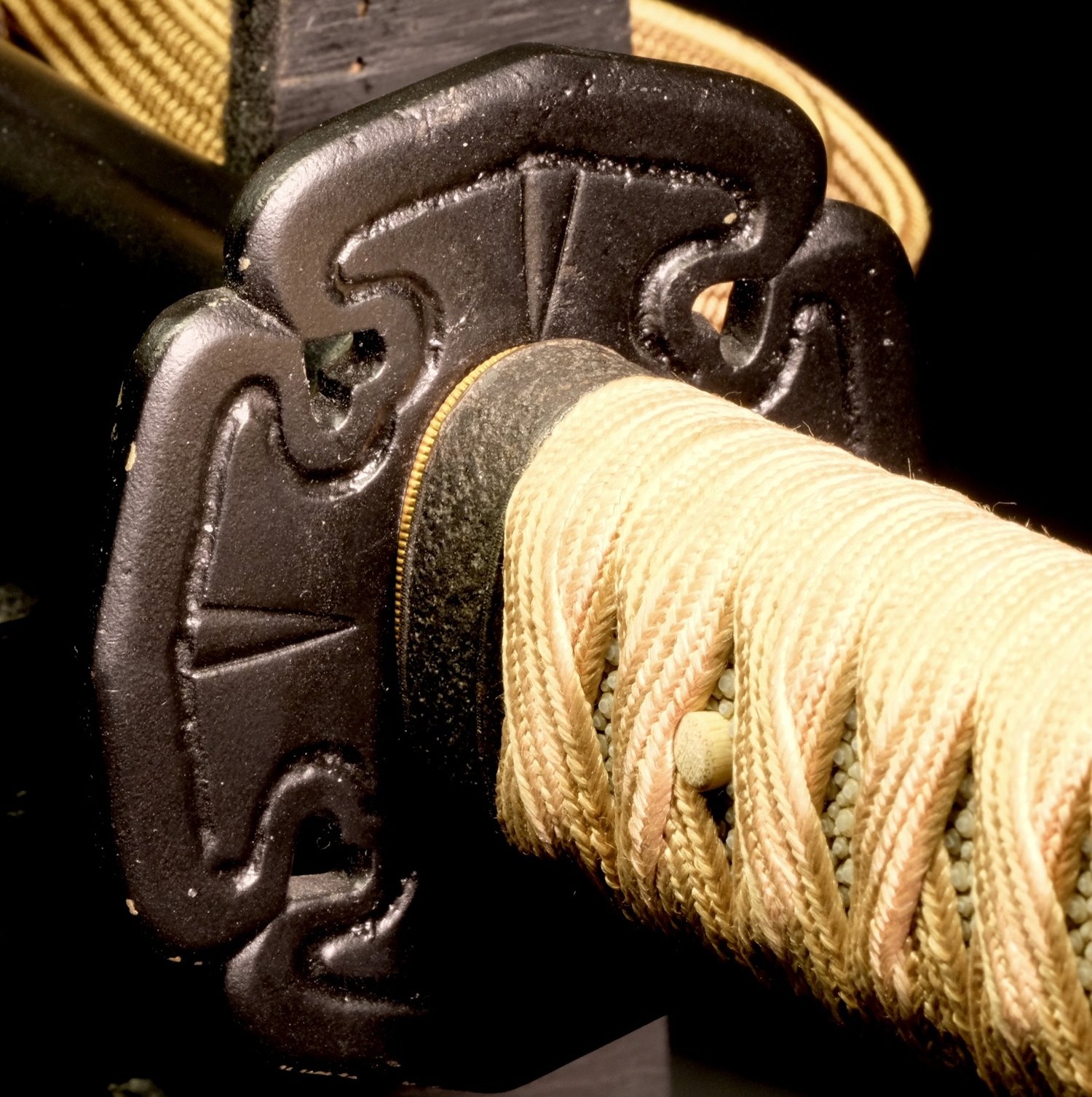
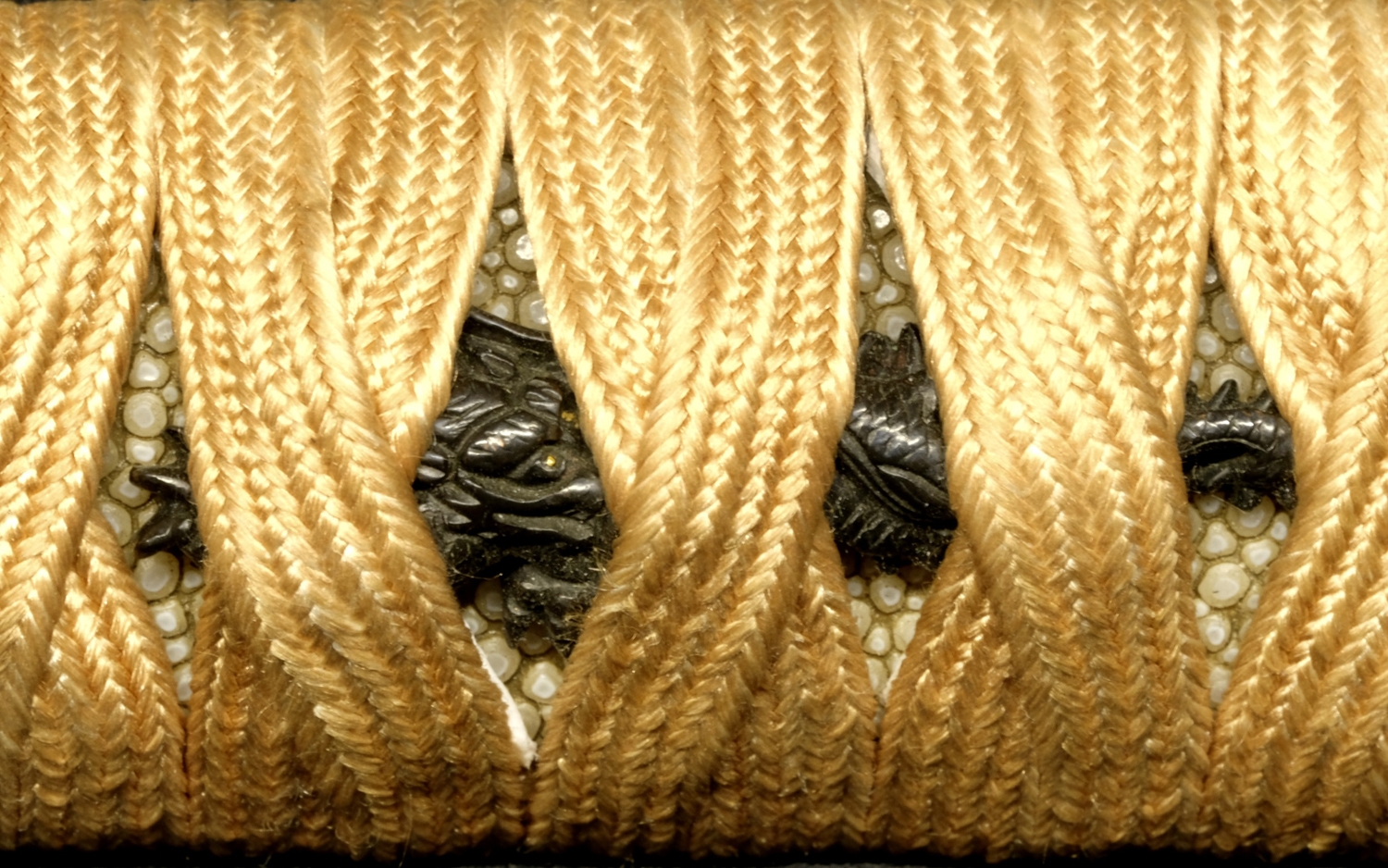
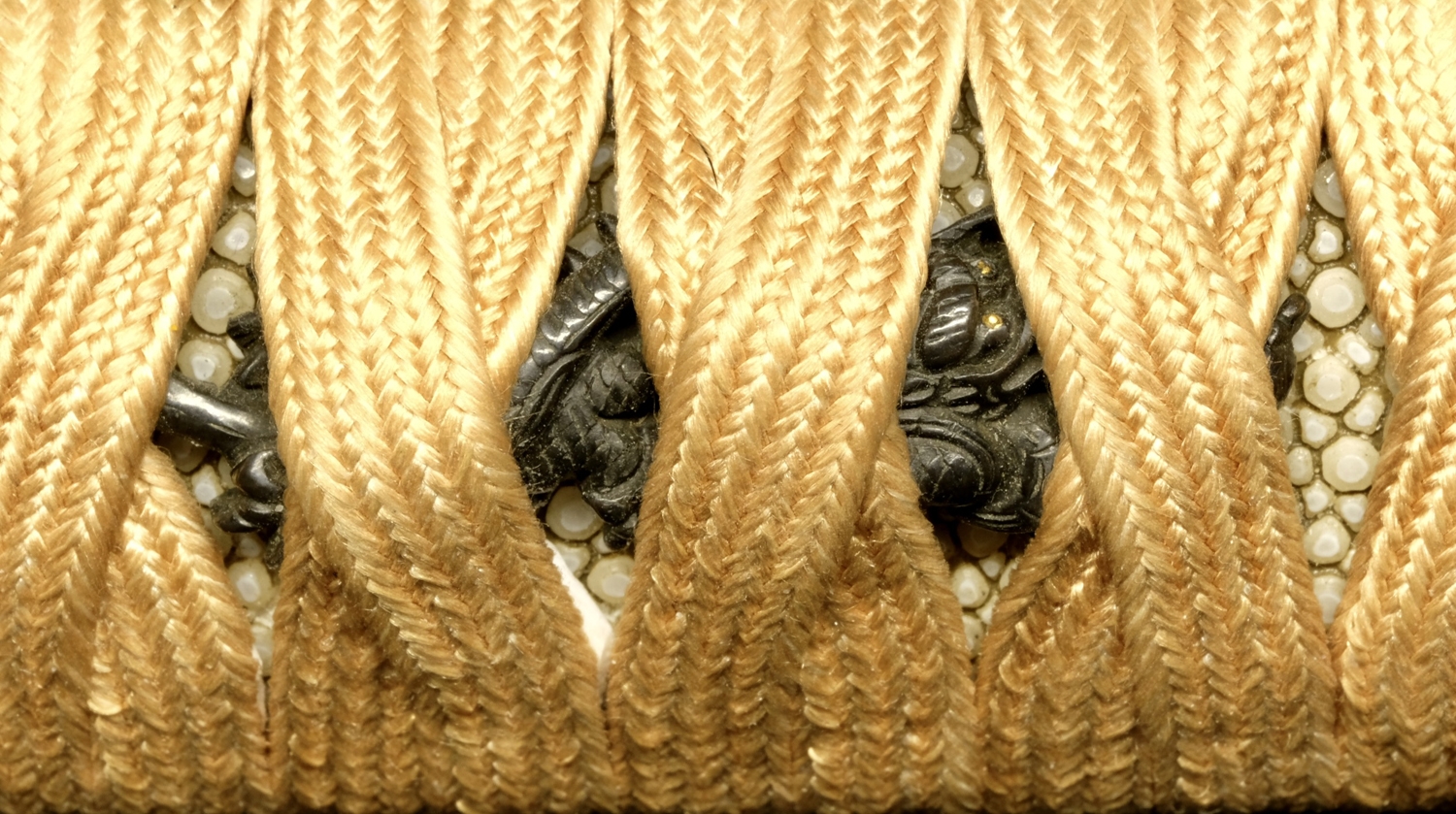
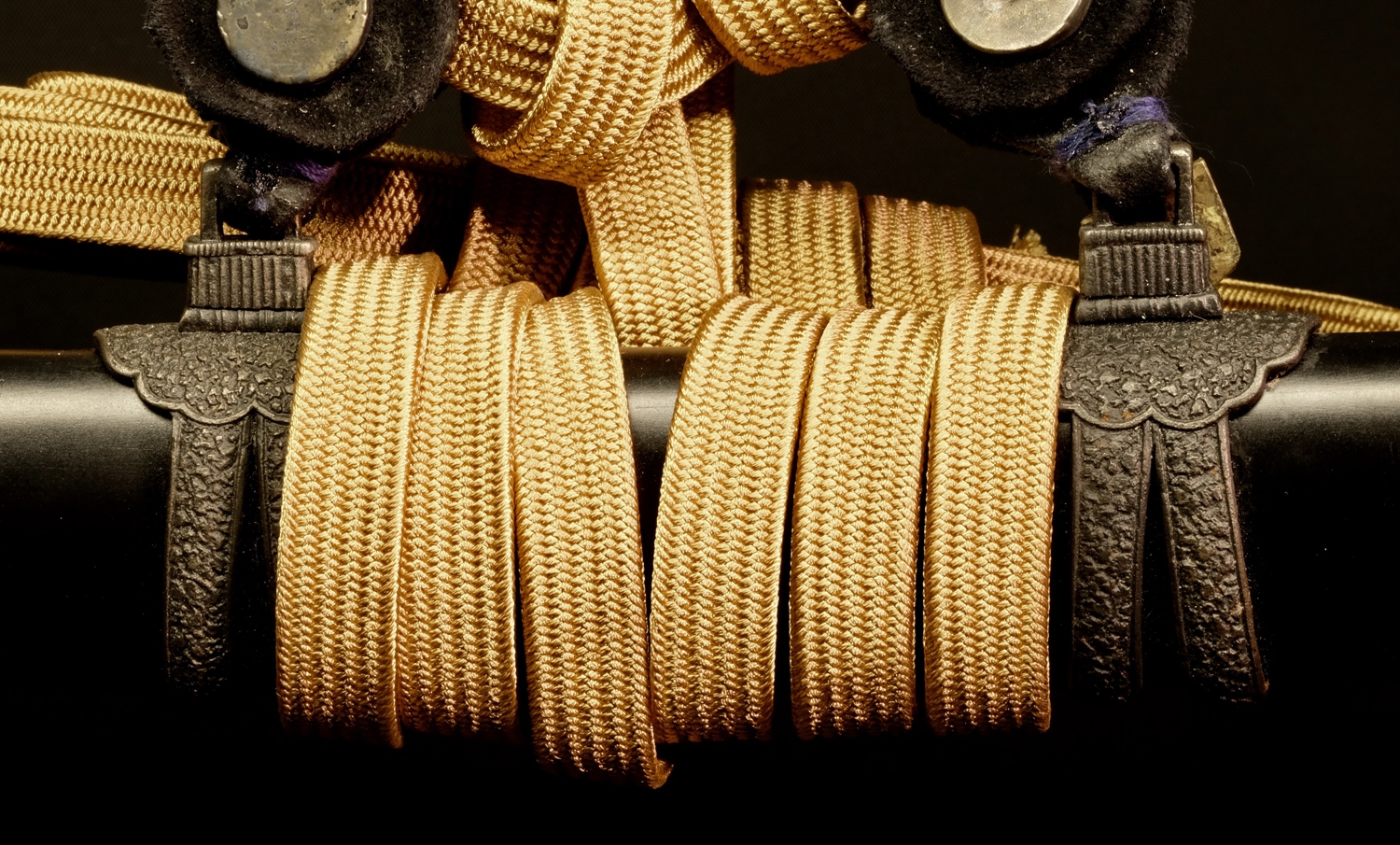
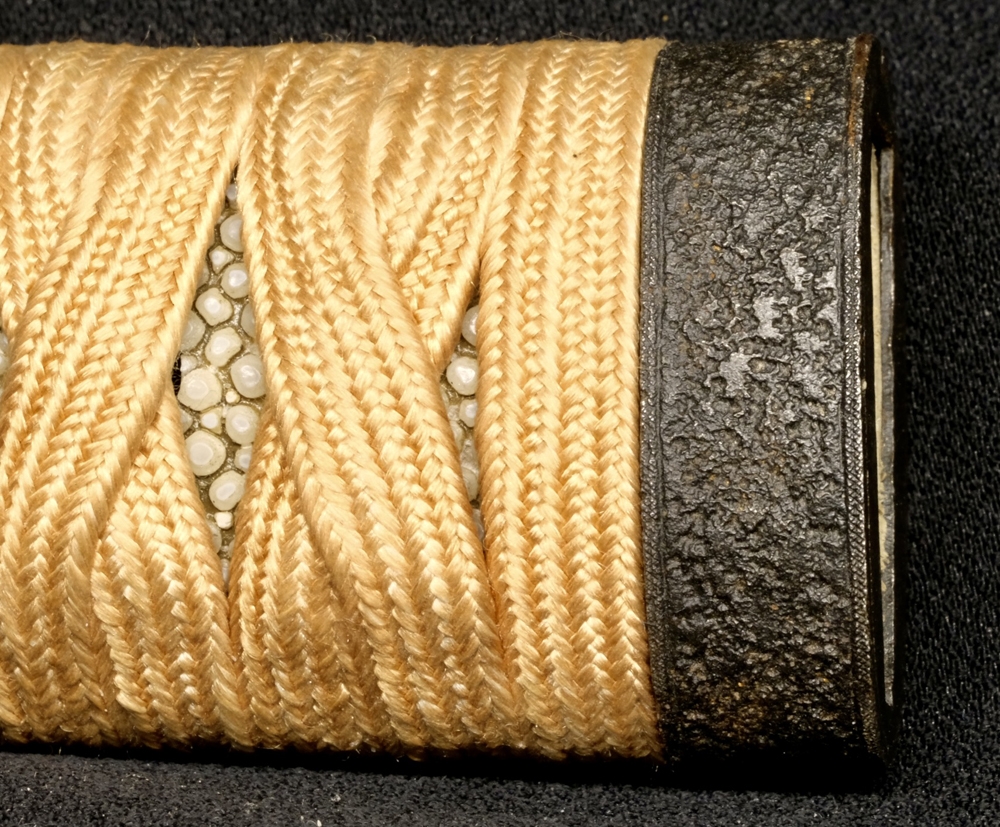
The koshirae appears to me as recent modern work. The koshirae is well made but doesn’t have the quality feel of a higher end koshirae. I do not mean to downplay the koshirae, but to maintain full transparency, I have to be honest. So, what are the cons I am referring to? The saya appears to be painted opposed to lacquered, the tsukmaki is not great work. The tsuba is blackened steel and some of the exterior has rubbed off. The pro’s are that overall the koshirae makes a nice display. The dragon menuki are nice, the tachi fittings ie; kabutogane, ashi, koiguchi, kojiri are all matching and nice, but modern.
*NOTE: This sword is priced on the quality of the blade, the koshirae is free.
To reiterate the blade is gorgeous.
Courtesy of Sesko’s, Swordsmiths A-Z:
NAOHIRO (直弘), Meiji (明治, 1868-1912), Ōshū – “Naohiro” (直弘), student of Jikishinshi Masahiro (直心子正弘)
NAOHIRO (直弘), 2nd gen., Meiji (明治, 1868-1912), Musashi – “Naohiro” (直弘), son of the 6th gen. Naomichi (直道), he lived in Edo´s Ichigaya-Takajōmachi (市ケ谷鷹匠町), real name Yanagawa Saijirō (柳川才次郎), mostly a chōji-midare
NAOHIRO (直弘), Shōwa (昭和, 1926-1989), Tōkyō –“Naohiro” (直弘), real name “Ueno Naohiro” (上野直弘)
This sword is published on page 126 of John Slough’s, The Modern Japanese Swordsmith 1868-1945 (see photo).
Condition: See Photos.
The information I have provided is all I have on this item.
Returns: Not accepted unless item is not as described.
Ships USPS Priority Mail Insured.
Your address and contact information is required to get an accurate shipping quote.
Buyer is responsible for knowing your countries import laws and regulations.
$3500 plus S/H and any additional associated fees (pp, wire, etc.)