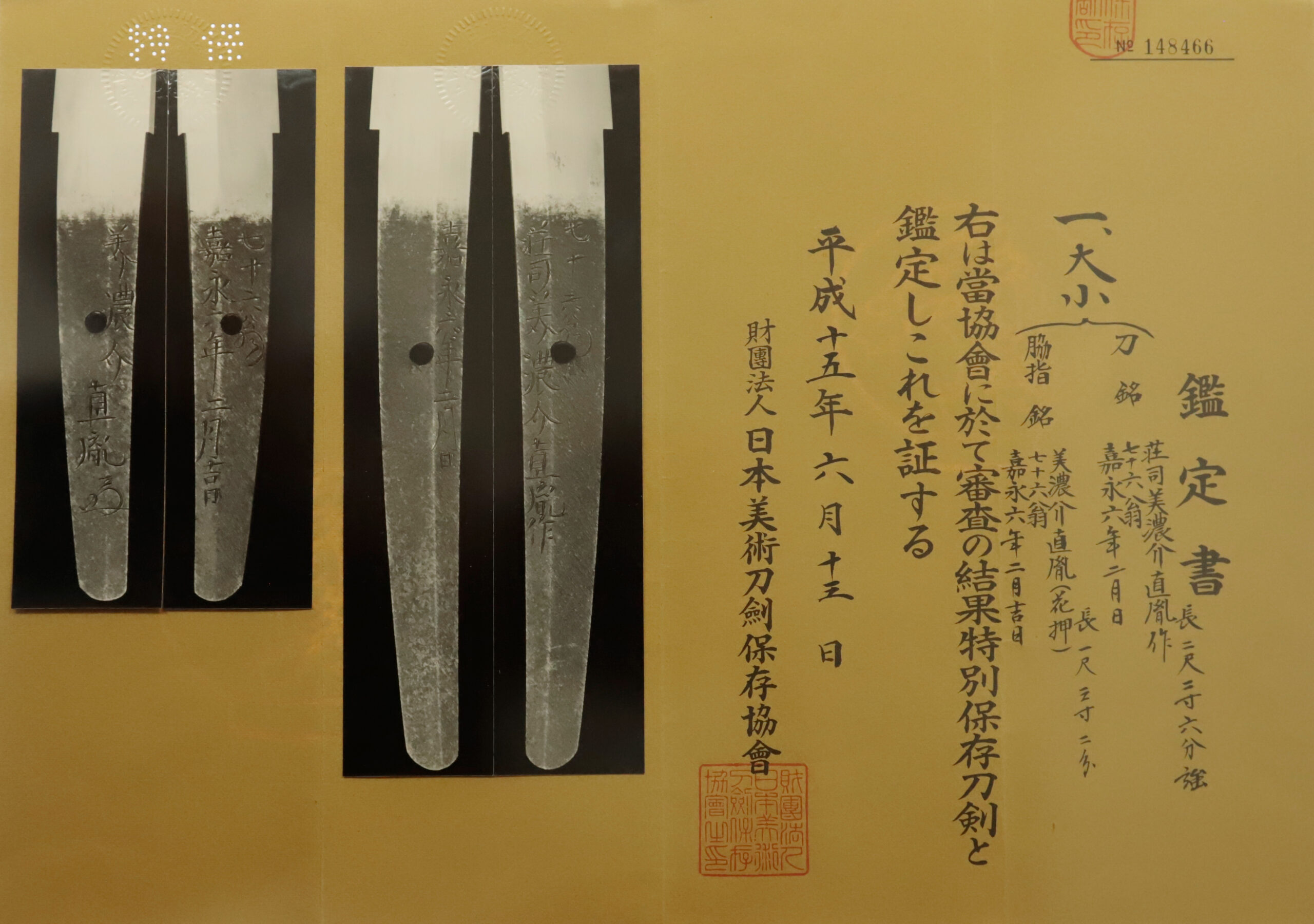
Understanding NBTHK Certification: What Sword Papers Actually Mean
When you see a Japanese sword listed with “NBTHK Hozon” or “Tokubetsu Hozon” papers attached, you’re looking at one of the most important documents in

When you see a Japanese sword listed with “NBTHK Hozon” or “Tokubetsu Hozon” papers attached, you’re looking at one of the most important documents in

The Gassan school occupies a unique position in nihonto history. While most schools faded after the Haitōrei Edict of 1876 abolished the warrior caste’s right

Few names in nihonto carry the weight of “Hizen Tadayoshi.” The first generation Tadayoshi (1572-1632) founded a smithing tradition that would dominate Saga Province for

The term Juyo Token translates roughly as “important sword,” but the bureaucratic English understates what this designation actually means in the world of nihonto. A

Owning a Japanese sword brings ongoing responsibility. These objects have survived hundreds of years not by accident but through generations of careful stewardship. Modern collectors

Between 1933 and 1945, a small group of swordsmiths working at the Nihonto Tanren Kai forge on the grounds of Yasukuni Shrine in Tokyo produced

The mei — signature — inscribed on a sword’s nakago (tang) is your first window into its identity. Learning to read mei opens up the

The terms tachi and katana both translate as “sword,” but in nihonto terminology they refer to specific sword types distinguished primarily by how they were

While sword blades draw most collector attention, the metal fittings that completed a samurai’s daisho — the tsuba (guard), menuki (hilt ornaments), fuchi-gashira (collar and

For roughly five centuries, from the late Heian period through the mid-Muromachi era, Bizen Province — corresponding to modern Okayama Prefecture — was the heart